The Library
Why Muscle Might Be the Most Important Organ of Longevity
Muscle is increasingly viewed as a cornerstone of healthy ageing. It supports metabolic health, resilience and recovery, while helping preserve physical function and independence as we age.
01 July 2026

Why Muscle Might Be the Most Important Organ of Longevity
Muscle has long suffered from an image problem.
For decades it has largely been discussed through the lens of aesthetics.
Bigger arms.
More definition.
A lower body fat percentage.
Yet modern physiology increasingly suggests that muscle may be one of the most important determinants of long-term health and human performance.
Muscle is not merely tissue.
It is infrastructure.


The Metabolic Engine
Muscle is energetically expensive.
Building it requires significant resources and maintaining it requires continuous investment.
This cost is precisely what makes it so valuable.
Muscle consumes energy.
It improves nutrient utilisation.
It contributes significantly to metabolic health and influences how effectively the body manages glucose and responds to periods of physiological stress.
Perhaps most importantly, muscle functions as reserve capacity.
The larger and more resilient this reserve becomes, the greater the body's ability to tolerate challenge.
This may help explain why muscle growth and fat loss are so closely linked.
When muscle tissue increases, energy expenditure also increases. Nutrient handling often becomes more efficient and long-term metabolic demand rises.
The implications extend well beyond body composition.
Muscle and Ageing
Beginning in our thirties, muscle mass gradually becomes easier to lose and harder to build.
This decline is rarely discussed with the seriousness it deserves.
Because losing muscle does not simply change how we look.
It changes how we function.
Muscle influences movement, resilience, balance, recovery, metabolic health and independence.
In many respects, muscle is one of the body's great protective systems.
It acts almost like a pension account for physical capability.
The more we invest in it earlier in life, the greater our reserves later.

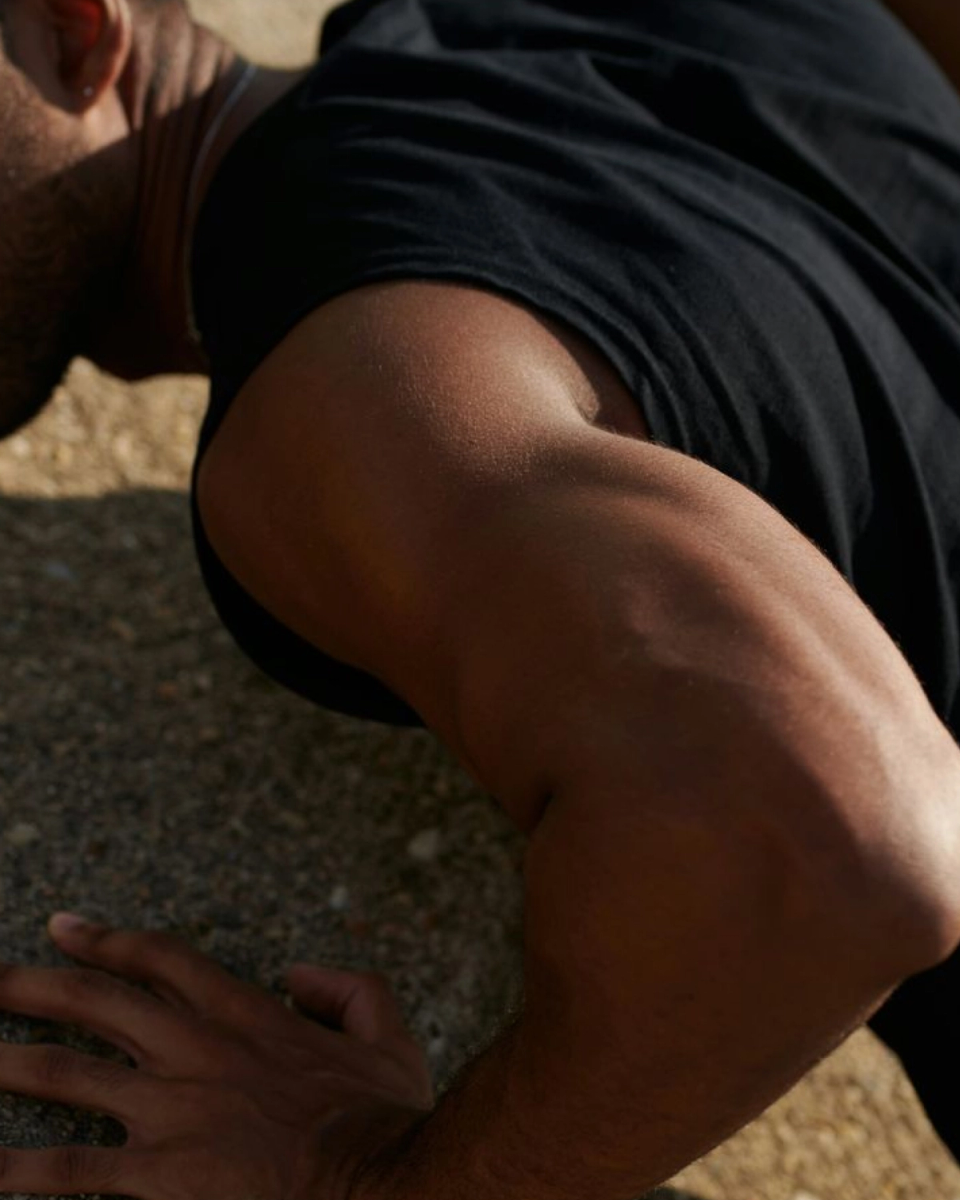
Why High Performers Prioritise Strength
Elite athletes understand this intuitively.
Increasingly, longevity clinicians and performance physicians are arriving at similar conclusions.
Strength training is not simply exercise.
It is an investment in future capacity.
The objective is not necessarily to become larger.
The objective is to remain capable.
To continue carrying luggage overhead at seventy.
To recover from illness more effectively.
To tolerate stress more efficiently.
To maintain energy production and metabolic resilience.
In many ways, the pursuit of muscle is the pursuit of optionality.
The ability to continue doing demanding things for longer.
Continue the Conversation
At The Ninth, we believe longevity should be measured less by lifespan and more by capability.
And capability, to a remarkable degree, is built upon muscle.
Because perhaps the most valuable retirement asset is not financial.
It is physiological.
Read more from the library

30 Sept 2026
Recovery After 35: What Actually Changes in the Body?
After 35, recovery rarely fails as a single trait. Hormones, sleep architecture, mitochondria and connective tissue change on different clocks — and that mismatch is the real constraint.

28 Sept 2026
Why VO₂ Kinetics Could Matter More Than VO₂ Max
VO₂ max measures the ceiling. Kinetics measure how quickly oxygen uptake rises when demand changes — and that delay may say more about daily capacity than the peak number.

23 Sept 2026
GLP-1, GIP, Glucagon and Amylin: The New Architecture of Metabolic Medicine
GLP-1, GIP, glucagon and amylin form a signalling architecture that governs appetite, glucose and energy balance. Understanding that network is more useful than focusing on any one medicine.